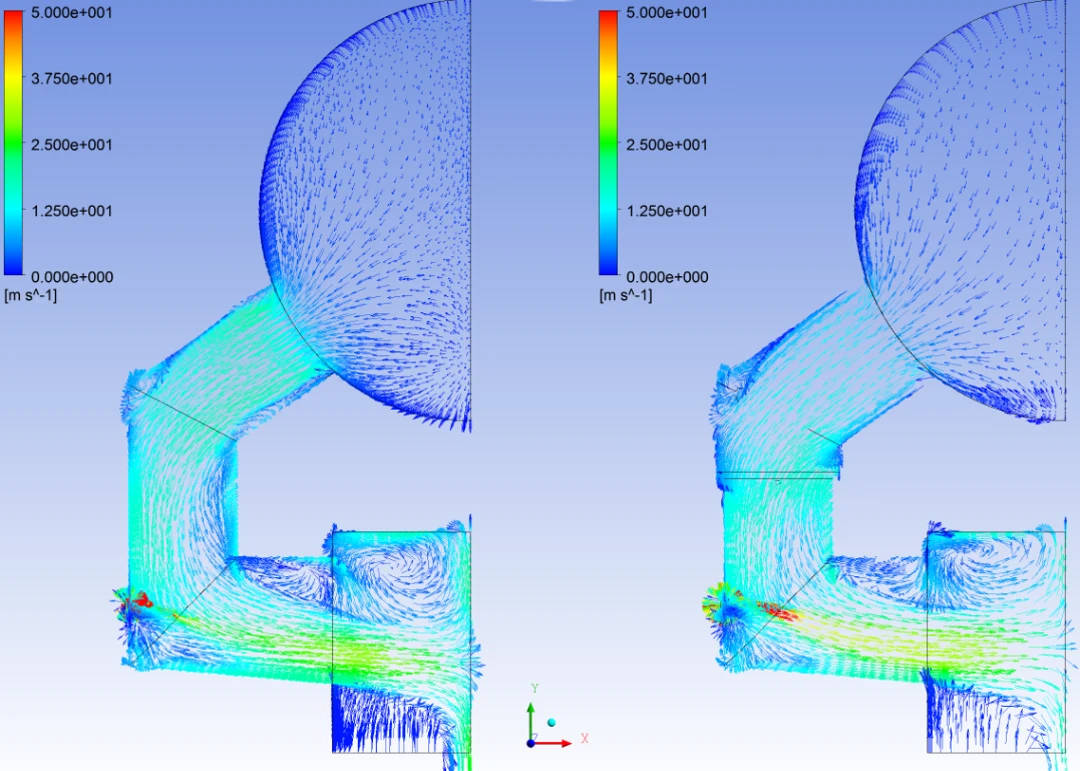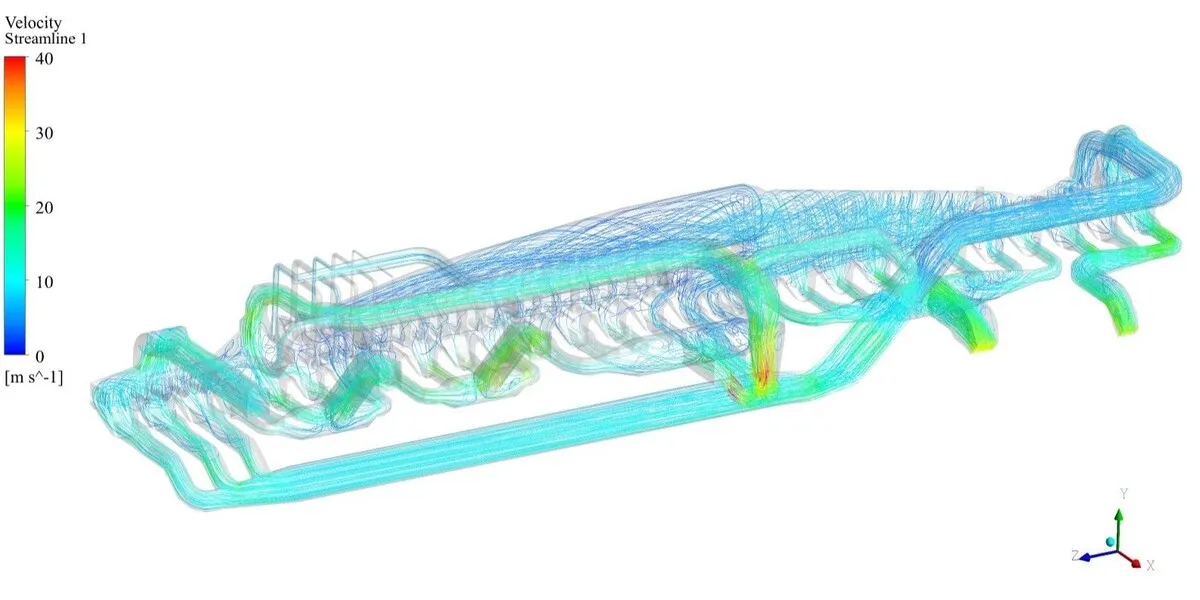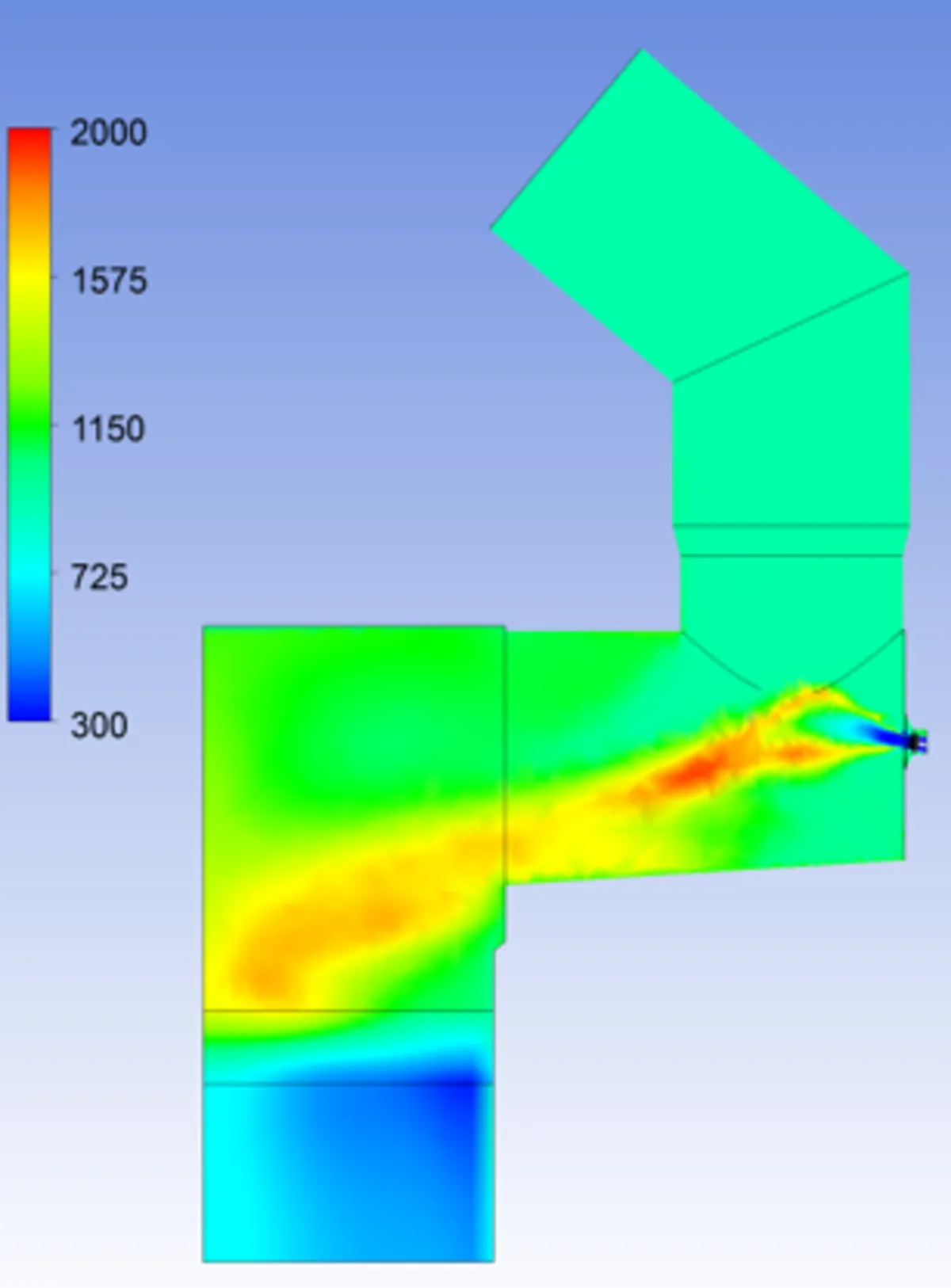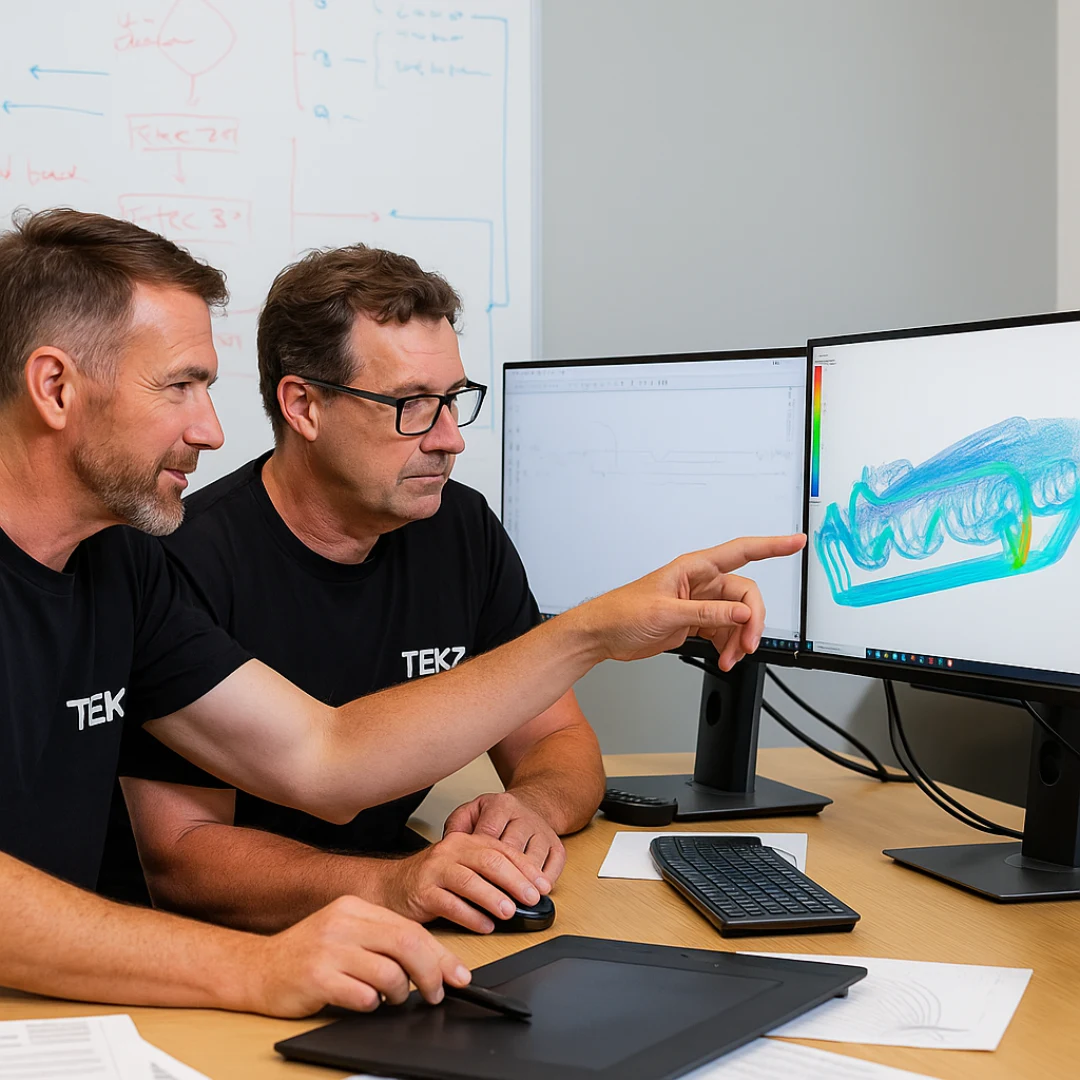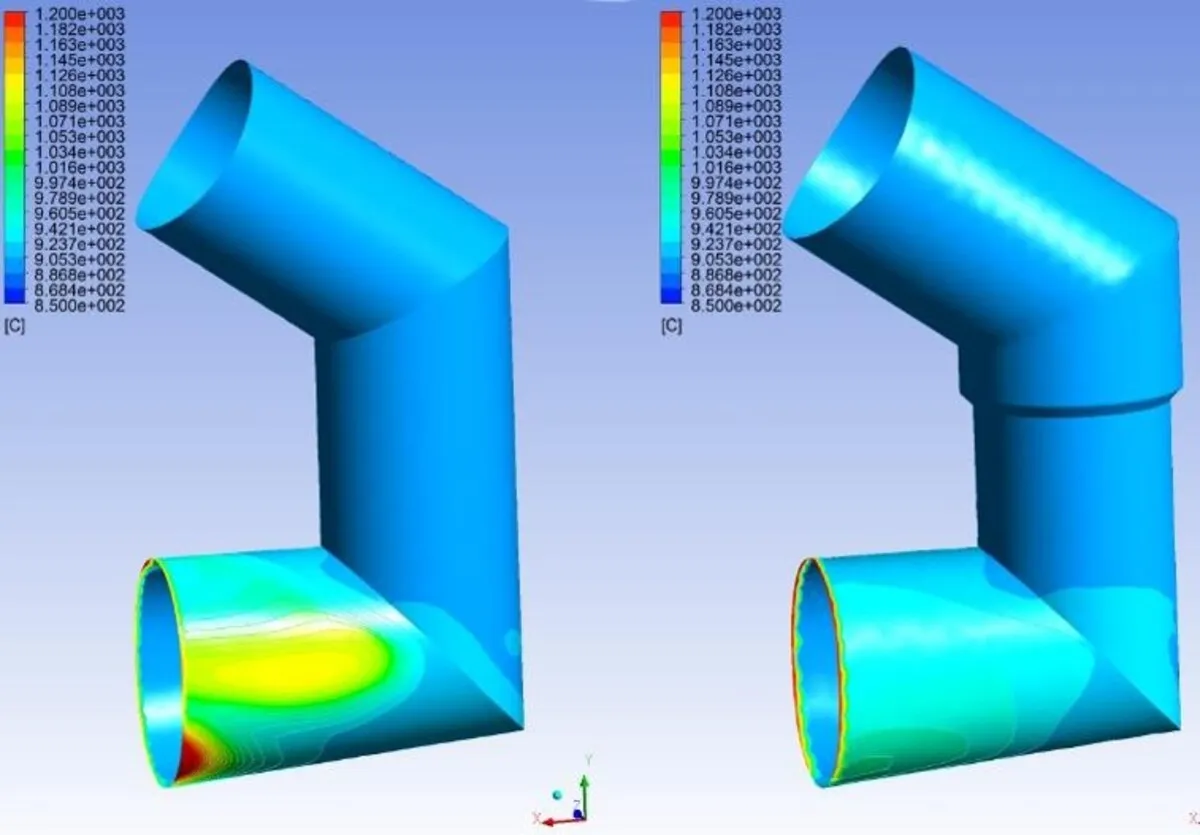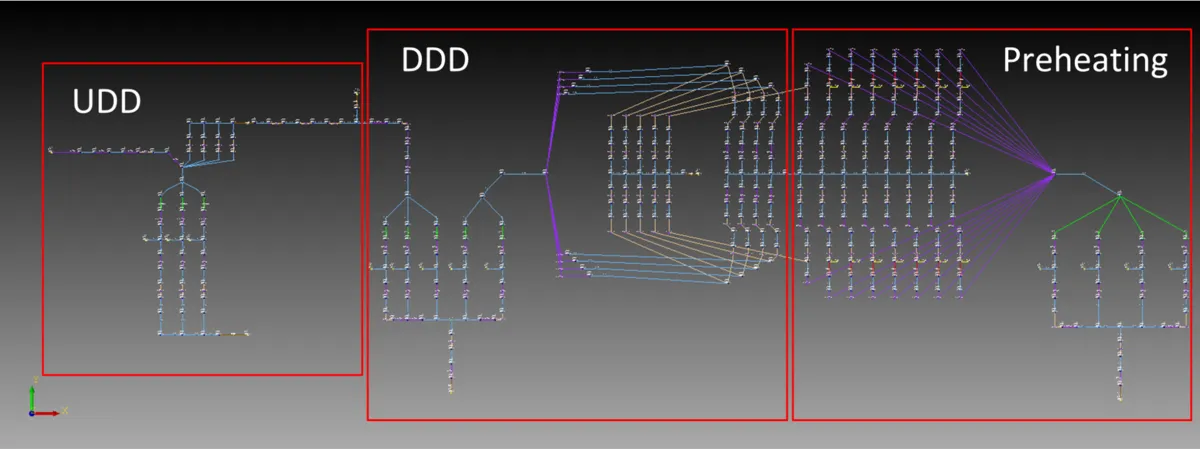
At TEK7, Computational Fluid Dynamics (CFD) is a key technology for designing, modernising, and optimising pelletising plants. The expert team uses CFD to simulate complex fluid, thermal, and mass transfer behaviours within the plant, turning operating data into clear, actionable insights. By accurately modelling airflow, heat transfer, and process interactions, uncertainty is reduced and data-driven decisions are supported to enhance performance, efficiency, and reliability.
Using 1D, 2D, and 3D simulations, we can replicate real-world operating conditions in a virtual environment. This allows us to visualise and evaluate plant processes with precision, reducing uncertainty, minimising risk, and supporting informed, data-driven decisions throughout the project lifecycle.
CFD in Action: TEK7’s Advanced Application
TEK7’s CFD methodology begins with the development of a high-fidelity 3D model of the plant, including wet areas or void spaces that channel process gases from fans to exhaust stacks. For brownfield projects, simulations incorporate operational plant data and real boundary conditions, while for greenfield projects, they are based on design parameters and engineering assumptions to ensure precision and relevance.
This detailed CFD study allows us to:
By synchronising CFD results with operational data or design specifications and on-site measurements, assumptions are validated, model accuracy is improved, and targeted, implementable improvements can be proposed that align with the overall project strategy.
Strategic Benefits of CFD in Pelletising Plants
CFD is more than a simulation tool; it is a strategic enabler. With TEK7’s deep domain expertise and advanced computational capabilities, pelletising operations can be modernised and optimised with greater confidence, unlocking enhanced performance, reliability, and efficiency.
Adding {{itemName}} to cart
Added {{itemName}} to cart